China Best Orthopedic Manufacturers for Global Buyers?

Time:2026-10-02 Author:Madeline
0%

Choosing China’s best Orthopedic manufacturers requires more than comparing catalogs or factory photographs. Global buyers need dependable evidence, technical competence, and consistent communication. A polished website is not proof of quality.

This guide examines manufacturers through practical purchasing criteria. These include product design, material traceability, quality systems, production capacity, inspection records, and after-sales support. Buyers should review ISO 13485 certification, where applicable, and confirm market-specific regulatory requirements before ordering. They should also request samples, test reports, packaging details, and production timelines. A small detail matters: can the supplier clearly explain the alloy grade, sterilization method, or dimensional tolerance?

Experience often reveals what brochures hide. A capable manufacturer should answer technical questions without vague promises. It should provide stable batch records and explain how nonconforming products are handled. Factory audits, video inspections, and independent testing can add useful confidence. However, no supplier is perfect, and no ranking can replace careful due diligence. That is worth remembering.

Some manufacturers may offer excellent engineering but limited customization. Others may provide competitive pricing but weaker documentation. Buyers should compare the complete risk, not only the unit cost. Communication delays, unclear warranties, and inconsistent packaging can disrupt clinical supply chains. The strongest partners usually understand both manufacturing demands and healthcare responsibilities. They also recognize that a successful order is not finished when the shipment leaves China. Reliable follow-up matters. This introduction helps global purchasers assess realistic options and make more informed Orthopedic sourcing decisions.
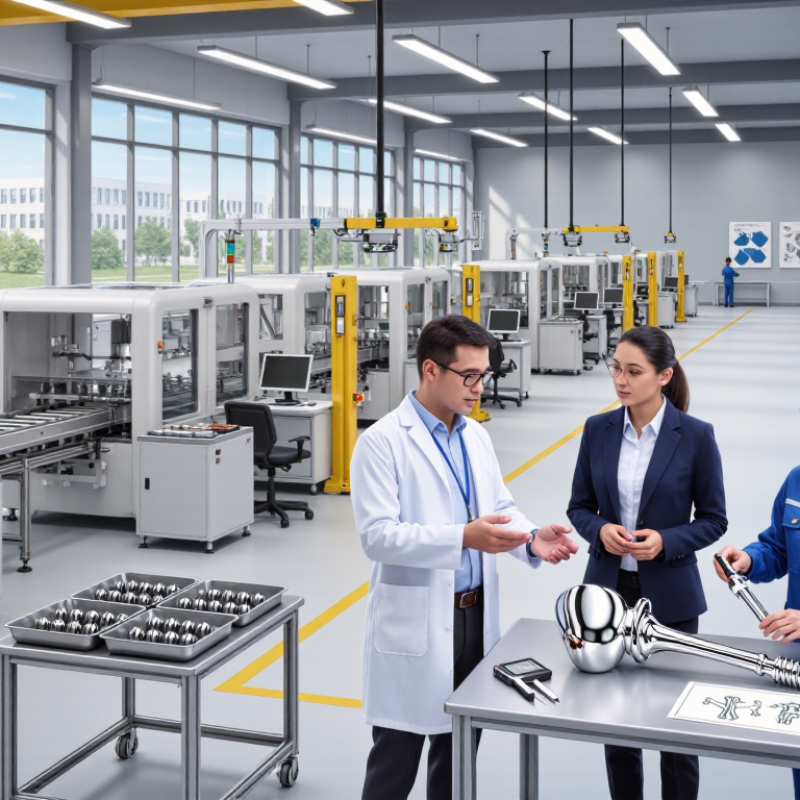
China Best Orthopedic Manufacturers for Global Buyers?

What Defines a Leading Orthopedic Manufacturer in China?

A leading orthopedic manufacturer in China is defined by more than production capacity. It combines engineering experience, controlled processes, and clear communication with overseas buyers. Engineers should understand anatomy, material behavior, and daily clinical use. Their work must connect design choices with patient safety and surgical efficiency.

Walk through the factory, if possible. Look for clean assembly areas, calibrated measuring tools, and workers following documented procedures. Details matter. A reliable supplier can provide material certificates, inspection records, sterilization information, and batch traceability without hesitation. It should also explain testing methods for strength, fatigue, corrosion resistance, and dimensional accuracy. These documents are useful only when they match actual production.

Experienced manufacturers usually support samples, design adjustments, packaging checks, and practical feedback from hospitals or distributors. They ask about the instrument’s grip, the implant’s fit, and the labels used in different markets. Ask harder questions. How are complaints investigated? How quickly can defective units be isolated? Who approves a process change?

No factory is flawless, and polished presentations can hide weak controls. I have found that honest answers often reveal more than impressive equipment. A manufacturer that admits a limitation, proposes a corrective action, and records the result may deserve greater trust. Buyers should review certifications, audit production, verify references, and assess communication before signing a long-term agreement. Consistent quality is built through repeatable behavior, not confident promises.

Which Orthopedic Products Do Chinese Manufacturers Produce?

Chinese orthopedic manufacturers produce a broad range of products for hospitals, distributors, and rehabilitation centers worldwide. Their portfolios often include hip, knee, and shoulder implants, trauma plates, screws, intramedullary nails, and spinal fixation systems. Some factories also make external fixation frames and surgical instruments.

The product range extends beyond implants. Buyers can source orthopedic braces, cervical collars, walking boots, plaster saws, casting materials, crutches, walkers, and rehabilitation equipment. Manufacturing facilities may use stainless steel, titanium alloys, medical polymers, and carbon fiber. Each material requires careful testing because strength, weight, and patient comfort can vary significantly.

Quality-focused manufacturers usually provide technical drawings, material certificates, inspection records, and sterilization information. They should also explain production tolerances and traceability procedures clearly. Buyers need to review regulatory documentation for the destination market, not rely only on attractive catalogs. A polished catalog is not enough.

Sample evaluation matters. Check surface finishing, screw compatibility, packaging strength, and labeling accuracy. For implants, confirm biocompatibility evidence and applicable clinical documentation. For braces and rehabilitation products, assess fit, adjustability, and user comfort. These details often reveal more than a factory visit.

Some suppliers offer custom dimensions or private-label packaging. Custom work can be useful, but it may increase testing time and minimum order quantities. The cheapest quotation may not be the safest choice. That point deserves careful review.

How to Evaluate China’s Orthopedic Manufacturers and Suppliers?

How to Evaluate China’s Orthopedic Manufacturers and Suppliers?

Evaluating a Chinese orthopedic manufacturer requires more than checking product photos or export claims. Request its quality certificates, factory address, operating scope, and recent audit records. ISO 13485 certification is useful, but it does not replace your own verification. Check whether the certificate covers the exact products you plan to purchase.

Ask for product samples before discussing large orders. Inspect surface finishing, dimensions, packaging, and label consistency. For implants and instruments, review material specifications, test reports, sterilization validation, and batch traceability. A reliable supplier should explain how it controls raw materials and handles nonconforming products. Pay attention to response speed. Clear answers often reveal stronger internal processes.

Speak with the technical and quality teams, not only a sales representative. Confirm production capacity, inspection equipment, lead times, and change-control procedures. Review complaint handling and recall communication in writing. Destination-market registration and documentation must also be checked independently. Requirements can differ greatly between countries. A polished website proves little. An impressive sample can still hide weak batch control. This is where buyers sometimes move too quickly. Allow time for an on-site audit or an independent inspection. Compare several suppliers using the same checklist, because low pricing may reflect missing validation, limited testing, or inconsistent materials. Reliability develops through evidence, repeated communication, and transparent records.

How to Evaluate China’s Orthopedic Manufacturers and Suppliers

A practical 100-point evaluation framework for global orthopedic buyers. The weighting reflects the evidence most commonly required during medical-device supplier qualification: regulatory compliance, quality systems, clinical support, production capability, supply reliability, and commercial transparency.

Buyers should verify each category with current certificates, audit records, technical files, traceability documents, product test reports, production capacity evidence, and written commercial terms. The percentages are a suggested buyer scorecard and are not ratings for any specific company or brand.

What Certifications and Quality Standards Should Global Buyers Check?

Global buyers should treat certification as evidence, not decoration. ISO 13485:2016 is the core quality-management standard for medical devices. It checks design controls, production records, corrective actions, and supplier oversight. ISO 14971 adds structured risk management, including hazards from implants, instruments, and foreseeable misuse. For patient-contacting products, ISO 10993 testing should address biocompatibility, sensitization, irritation, and biological risks.

Look beyond certificates. The ISO Survey 2023 recorded 1,265,216 ISO 9001 certificates across 189 countries and economies, but certificate volume does not prove orthopedic expertise. Ask for the current certificate scope, audit dates, nonconformity records, and product-specific validation. Review material certificates for titanium, stainless steel, or polymers. Check lot traceability from raw material to finished package. Manufacturing sites should also explain sterilization validation under ISO 11135 or ISO 11137, when applicable, and packaging validation under ISO 11607.

Regulatory evidence matters. The World Health Organization’s Global Atlas of Medical Devices describes more than two million medical-device types worldwide, showing why classification and documentation can become complicated. Require technical files, risk-analysis reports, clinical evidence, and post-market complaint procedures. Check whether the manufacturer can support market-specific requirements, such as the EU Medical Device Regulation or United States quality-system rules. Ask difficult questions.

A factory may pass an audit and still miss a weak supplier-control issue. I have seen polished documents hide unclear responsibilities. Independent inspection, sample testing, and a small pilot order reduce that risk. Never rely on a logo alone.

China Best Orthopedic Manufacturers for Global Buyers? - What Certifications and Quality Standards Should Global Buyers Check?

A practical due-diligence checklist for evaluating orthopedic implant, instrument, and medical-device manufacturers.

Check Area Certification or Standard What It Covers Why Global Buyers Should Check It Evidence to Request Key Verification Point
Quality Management ISO 13485:2016 Medical-device quality management systems, including design controls, production, supplier management, traceability, corrective actions, and complaint handling. It is the main internationally recognized quality-system reference for medical-device manufacturers and is highly relevant to orthopedic products. Current certificate, certification scope, site address, expiration date, and the accredited certification body's name. Confirm that the certificate covers the exact manufacturing site and product category, not only trading or administrative activities.
General Quality System ISO 9001:2015 General quality management principles, process control, customer requirements, performance evaluation, and continual improvement. It supports operational consistency, but it does not replace the medical-device-specific controls required by ISO 13485 or applicable regulations. Certificate scope, covered locations, audit status, and documented relationship with the medical-device quality system. Treat ISO 9001 alone as insufficient evidence for orthopedic implants or other regulated medical devices.
Risk Management ISO 14971:2019 Medical-device risk management across the product life cycle, including hazard identification, risk estimation, risk controls, and post-production information. Orthopedic devices may involve implant breakage, wear debris, corrosion, infection, migration, and revision risks that require documented controls. Risk-management plan, risk analysis summary, residual-risk evaluation, and linkage between risks, testing, labeling, and design controls. Check that the risk file is product-specific and updated when materials, processes, suppliers, or intended use changes.
Biological Safety ISO 10993 Series Biological evaluation of materials and finished devices, including endpoints such as cytotoxicity, sensitization, irritation, systemic toxicity, and implantation effects where applicable. Implants remain in contact with tissue or bone, so material safety must be assessed for the intended contact type and duration. Biological evaluation plan and report, material composition, test laboratory details, and justification for any waived tests. Verify that testing was performed on the final or clinically representative finished device, including surface treatments and residues.
Materials and Implants ISO 5832, ISO 14630, and Relevant Product Standards Material requirements for surgical implants and general requirements for non-active surgical implants; additional standards may apply to specific hip, knee, spinal, trauma, or dental products. Material grade, mechanical properties, cleanliness, geometry, and intended anatomical application directly affect implant performance. Material certificates, heat or lot traceability, chemical composition, mechanical test reports, surface-treatment specifications, and applicable product-standard test reports. Match the material certificate and test report to the exact production lot and finished-product specification.
Sterilization ISO 11135, ISO 11137, or ISO 17665 Validation and routine control of sterilization processes using ethylene oxide, radiation, or moist heat, respectively. Sterility claims must be supported by a validated process appropriate to the device, packaging system, and intended shelf life. Sterilization validation report, routine monitoring records, sterility assurance level justification, and process-change controls. Confirm whether the manufacturer sterilizes in-house or uses a qualified contract sterilization facility.
Packaging and Shelf Life ISO 11607-1 and ISO 11607-2 Requirements for packaging materials, sterile barrier systems, forming, sealing, assembly, and packaging-process validation for terminally sterilized devices. Packaging must maintain sterility and protect implants or instruments through transport, storage, and handling. Packaging validation, seal-strength and integrity results, transportation testing, accelerated-aging data, and real-time shelf-life evidence where available. Check that packaging validation covers the final configuration, sterilization method, shipping conditions, and stated shelf life.
Market Authorization Applicable Regulatory Approval Regulatory conformity for the destination market, such as EU Medical Device Regulation (EU) 2017/745, United States FDA requirements, or the relevant national device authority. A quality certificate does not automatically authorize a product for sale in every country. Declaration of Conformity, device registration or clearance details, technical documentation index, authorized representative information, and applicable certificate. Verify the exact product model, intended use, risk classification, legal manufacturer, and destination-market status.
U.S. Quality Requirements FDA Quality Management System Regulation The U.S. medical-device quality framework, including design, production, complaint, corrective-action, and record requirements; the FDA QMSR became effective on February 2, 2026 and incorporates ISO 13485:2016 by reference with U.S.-specific provisions. U.S. buyers need evidence that the manufacturer can meet FDA obligations in addition to holding an ISO certificate. FDA establishment registration and listing information where applicable, inspection history, quality-system records, complaint procedures, and product submission or clearance documentation. Do not treat FDA establishment registration as product approval; verify the regulatory pathway for each device.
Traceability and Post-Market Control Lot Control, UDI, Complaint Handling, and CAPA Identification of materials and finished devices, distribution records, nonconformance control, adverse-event monitoring, recalls, complaints, and corrective and preventive actions. Reliable traceability enables rapid investigation and targeted corrective action if a quality or safety issue occurs. Sample batch records, device labels, lot-number structure, recall procedure, complaint log template, CAPA procedure, and retention-period policy. Confirm that raw materials, machining, cleaning, surface treatment, sterilization, packaging, and shipment can be traced to the finished device.

Buyer Reminder

Certifications and test reports should be checked against the exact manufacturing site, product family, model, material, sterilization method, and destination-market requirements. A certificate alone does not prove product safety, regulatory approval, or manufacturing capability.

How Can Global Buyers Manage Sourcing, Compliance, and Delivery?

Global buyers should treat orthopedic sourcing as a controlled process, not a simple price comparison. In practical sourcing work, the first check is product classification, intended use, and risk level. Ask for ISO 13485 certification, technical files, sterilization records, and material traceability. The WHO Global Model Regulatory Framework for Medical Devices stresses risk-based controls and post-market surveillance. A supplier’s certificate helps, but it does not replace an independent audit.

Compliance details must match the destination market. Verify labeling, clinical evidence, language requirements, and importer responsibilities before placing a purchase order. Request sample inspection reports and compare them with production records. Small gaps matter. A polished document can still hide weak process control. This is where buyers sometimes move too quickly.

Delivery planning needs equal attention. The World Bank’s 2023 Logistics Performance Index gave China a score of 3.7 out of 5, showing strong logistics capability but not uniform performance across regions. The UNCTAD Review of Maritime Transport 2023 notes that ships carry over 80% of global merchandise trade. Buyers should confirm port options, packaging tests, temperature limits, insurance, and backup routes. Build buffer time for customs reviews and holiday congestion. It costs more. Yet one delayed orthopedic shipment can disrupt surgery schedules, inventory plans, and regulatory commitments. Forecasts are never perfect, so monthly supplier reviews and documented corrective actions remain necessary.

FAQS

What defines a reliable orthopedic manufacturer in China?

Reliable manufacturers combine engineering knowledge, controlled production, and clear buyer communication.

What factory details should buyers inspect?

Look for clean assembly areas, calibrated tools, and documented work procedures.

Which product documents should buyers request?

Request material specifications, strength tests, fatigue results, corrosion tests, and dimensional checks.

How can buyers evaluate product samples?

Inspect surface finishing, dimensions, instrument grip, packaging, and label consistency.

What questions should buyers ask quality teams?

Ask how complaints are investigated and how defective units are isolated.

Is a quality certificate enough for supplier approval?

No. A certificate supports evaluation but does not replace independent verification.

How should global buyers manage regulatory compliance?

Confirm product classification, intended use, risk level, labeling, and language requirements.

How can buyers reduce delivery problems?

Confirm ports, packaging strength, temperature limits, insurance, and backup routes.

Conclusion

Choosing the best Orthopedic manufacturer in China requires more than comparing prices. Global buyers should assess a supplier’s production capabilities, engineering expertise, material control, product consistency, and ability to support customized requirements. Chinese manufacturers may produce a wide range of orthopedic products, including implants, surgical instruments, fixation systems, joint-related devices, and rehabilitation equipment. A reliable supplier should also demonstrate clear quality procedures, traceable manufacturing records, qualified personnel, and stable capacity for long-term orders.

Before placing an order, buyers should verify applicable certifications, testing reports, quality management systems, and compliance with the regulations of the destination market. Careful evaluation should also cover communication, sample approval, packaging, documentation, intellectual property protection, lead times, and after-sales support. To manage sourcing successfully, global buyers should define technical specifications, conduct supplier audits, confirm inspection procedures, and establish clear contracts for delivery and quality responsibilities. A structured process helps reduce supply risks and supports safe, compliant, and dependable international cooperation.

Madeline

Madeline

Madeline is a dedicated marketing professional with a wealth of expertise in our company's core offerings. With a keen understanding of the industry, she brings a unique perspective to her role, consistently delivering high-quality content that highlights the superior aspects of our products. As......