Orthopedic equipment manufacturers shape many parts of modern musculoskeletal care, from joint replacement implants and surgical instruments to braces and rehabilitation devices. Their products may look similar in a catalog, yet materials, design, clinical evidence, and after-sales support can differ considerably. A titanium implant, for example, is only one part of a larger system that includes sizing options, surgical tools, training, and follow-up. Details matter.
This guide introduces ten manufacturers with an international presence and a notable role in the orthopedic sector. It considers factors such as product specialization, manufacturing capabilities, quality systems, research activity, and service networks. The list is a practical starting point, not a universal ranking: company portfolios and availability change, and a manufacturer’s reputation does not establish that a particular product suits every patient or clinical setting. That sounds neat. It rarely is. Product suitability depends on clinical judgment, local requirements, and the needs of the person receiving care. Buyers should verify current product information, regulatory status in their region, and support arrangements directly with manufacturers or qualified professionals. The aim here is a clear overview, not a recommendation to choose one brand over another.
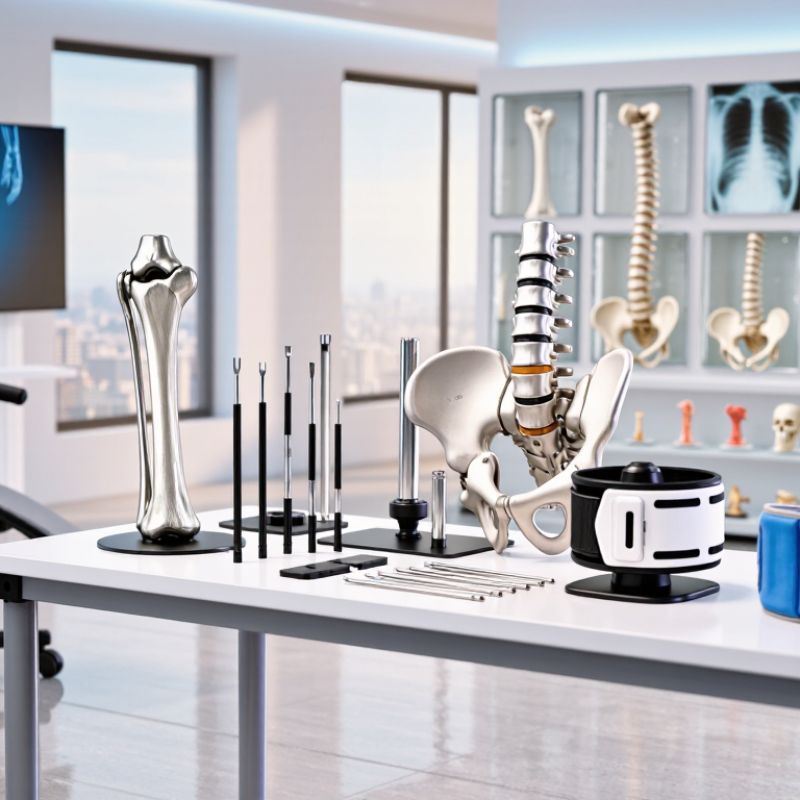
Defining Orthopedic Equipment and Its Main Categories
Orthopedic equipment includes tools and devices used to assess, treat, stabilize, or support bones, joints, and related tissues. It ranges from surgical instruments and implanted hardware to external braces and rehabilitation aids.
Joint-replacement systems
Spinal devices
Trauma-fixation plates and screws
Arthroscopy equipment
Orthoses
The boundary is not always neat: a support brace and an implanted joint serve different needs, but both fall within the wider field.
Grand View Research estimated the global orthopedic-devices market at USD 53.9 billion in 2023
with a projected 4.9% compound annual growth rate from 2024 to 2030. These figures describe a broad market, not a count of devices or procedures, and report definitions can differ.
In practice, category choice depends on the condition, anatomy, and care setting. A small fixation screw, for example, must work alongside imaging, surgical instruments, and a patient-specific treatment plan.
Not interchangeable.
Tips: Check whether a product is an implant, an external support, or a surgical tool before comparing specifications. Look for clear information on intended use, materials, sizing, and compatibility.
Fit matters.
A technically advanced device may still be unsuitable for a particular patient or procedure.
Criteria for Selecting and Comparing Leading Manufacturers
Comparing orthopedic equipment manufacturers starts with the clinical task, not a glossy catalog. An operating table, imaging system, and rehabilitation device face different demands. Review performance data, material specifications, cleaning instructions, and service intervals. Ask how equipment is tested under repeated loads, not only during polished demonstrations. Details matter. Can staff adjust controls while wearing gloves? Do cables stay clear of walking paths?
Assess the evidence behind product claims. Look for clear testing methods, traceable quality records, and instructions that explain intended use and maintenance. Check whether training materials suit the people who will use the equipment, from clinicians to technicians. Vague answers deserve follow-up. A manufacturer’s technical support also matters: response times, spare-part access, and repair procedures can affect daily operations. Ask for realistic service expectations, not only promises.
Compare total ownership costs, including installation, training, maintenance, and likely replacement parts. Seek feedback from facilities with similar workloads, while recognizing that one site’s experience may not transfer neatly to another. A weighted scorecard can help, but its chosen criteria may favor familiar features over better-fitting solutions. No comparison removes judgment; even sound equipment can feel awkward in a specific workflow. Test usability with actual staff before making a decision.
Orthopedic Equipment Manufacturers: Regulatory Milestones for Comparison
Use these internationally relevant quality, risk-management, and regulatory milestones as checkpoints when evaluating manufacturers. The dates are publication or application years—not company rankings or performance scores.
When comparing suppliers, verify current certification scope, risk-management documentation, market-specific regulatory compliance, manufacturing controls, and post-market surveillance. Requirements and transition provisions can vary by jurisdiction and device.
Profiles of Ten Major Orthopedic Equipment Manufacturers
Top 10 Orthopedic Equipment Manufacturers Worldwide?
Profiles of Ten Major Orthopedic Equipment Manufacturers
Orthopedic manufacturing covers implants, surgical tools, imaging systems, and rehabilitation equipment. These ten profiles describe distinct areas of expertise, not a ranked market list. Product ranges and availability can vary by region.
One manufacturer may focus on hip and knee implants, emphasizing fit, material traceability, and compatible instruments. Another may produce trauma plates and screws designed for stable fixation. A third may specialize in spinal implants and instruments, where precise sizing is essential. A sports-medicine manufacturer may supply arthroscopy tools for work inside a joint. An external-fixation specialist may build adjustable frames for stabilizing injured limbs. Small details matter.
Other manufacturers concentrate on surgical instruments, such as reusable cutters and drills that need reliable handling. Some develop navigation or robotic systems to help clinicians plan and guide procedures. Imaging and measurement equipment makers support assessment and surgical planning. Biomaterials companies may produce bone substitutes or surgical cements, with clear instructions for preparation and use. Rehabilitation-focused manufacturers offer braces and mobility aids adjusted to patients’ needs. Comparing suppliers calls for more than a product list: clinicians and buyers can review evidence, training, service support, and fit for the intended setting. No single profile suits every hospital.
Core Products and Technologies Across the Industry
Orthopedic equipment manufacturers serve a wide range of clinical needs, from fracture repair to joint reconstruction. Their core products include plates, screws, intramedullary nails, artificial hips and knees, and spinal fixation systems. Each device must match the anatomy, surgical approach, and load it is expected to bear. Small details matter: a screw’s thread, an implant’s surface texture, or the grip of an instrument can affect handling and placement.
Materials and manufacturing methods shape performance. Titanium alloys are valued for strength and relatively low weight, while cobalt-chromium alloys are common in demanding joint applications. Some implants use porous surfaces to support bone attachment; others rely on polymer components to reduce friction. Computer-assisted planning, navigation, and robotic tools can help surgeons align components, but they do not replace clinical judgment. The fit still matters. Manufacturers also develop reusable instruments and sterile, single-use components for operating rooms. Clear labeling and consistent production are essential, yet a polished specification sheet cannot show how easily a tool works with gloves on or how it performs across varied anatomy. No catalog tells the whole story. Independent clinical evidence, careful training, and feedback from surgical teams help put product claims into context.
Global Market Trends and Competitive Factors
Global orthopedic equipment competition is shifting from scale alone toward dependable clinical performance, service access, and cost control. Grand View Research’s 2024 orthopedic devices report estimated the market at about US$56.8 billion in 2023, with projected annual growth of 4.3% through 2030. These figures are estimates, and market boundaries differ across reports. Still, the direction is clear. The World Health Organization projects that one in six people worldwide will be aged 60 or older by 2030, increasing demand for joint reconstruction, fracture care, and mobility support. Not every region will grow at the same pace.
Manufacturers compete through implant durability, precise instruments, and equipment that fits existing operating rooms. A surgeon may compare small details: grip texture, visibility under surgical lights, or how quickly a tray can be prepared. They matter. Hospitals also weigh training, maintenance, delivery reliability, and the total cost of treatment—not just the purchase price. The weak point is often after-sales support; advanced equipment has limited value when parts or technical help arrive late.
Market pressure is uneven. Ageing populations and rising procedure volumes support demand, while tighter hospital budgets encourage value-based purchasing. Industry reports often identify technology and emerging-market access as growth drivers, but adoption depends on trained staff and local infrastructure. A sophisticated system can still be a poor fit. Manufacturers must balance innovation with repairability, clear clinical evidence, and consistent product quality across markets.
FAQS
Start with the clinical task. Compare performance data, materials, cleaning instructions, and service intervals. A glossy catalog is not enough.
Ask for testing methods, quality records, and clear maintenance instructions. Vague answers need follow-up. Evidence matters.
Staff can check glove-friendly controls, instrument grip, and cable placement. A tool may look fine but feel awkward in a real workflow.
Include installation, training, maintenance, and likely replacement parts. The purchase price tells only part of the story.
Products may include plates, screws, intramedullary nails, artificial hips and knees, spinal fixation systems, and surgical instruments.
Titanium alloys are valued for strength and relatively low weight. Cobalt-chromium alloys are common in demanding joint applications. Some implants have porous surfaces.
No. They can help with alignment and planning, but clinical judgment remains essential. Fit still matters.
Ask sites with similar workloads about daily use and service. Their experience may not transfer neatly. One scorecard can mislead.
Conclusion
This article explores the worldwide Orthopedic equipment industry, beginning with the main product categories used to support bone, joint, and musculoskeletal care. It outlines how equipment can serve different clinical needs, from injury stabilization and joint reconstruction to surgical planning and rehabilitation. To compare leading manufacturers, the article considers factors such as product range, engineering quality, usability, research and development, manufacturing capabilities, and international reach.
The profiles of ten major manufacturers offer a broad view of how the industry meets these needs without focusing on brand promotion. The article also reviews shared technologies, including precision-designed implants, advanced materials, and digital tools that assist with planning and care. Finally, it considers market trends and competitive factors, such as evolving patient needs, technological progress, and demand across regions, giving readers a clear framework for understanding the sector.
 SNK Medical
