China Best Orthopedic Manufacturers for Global Buyers

Time:2026-11-25 Author:Sophia
0%

Choosing among China’s Orthopedic manufacturers takes more than comparing prices or polished catalogs. Buyers need evidence that a supplier can deliver consistent quality, clear documentation, and dependable communication. Details matter. A production line may look impressive, yet material traceability, inspection records, and corrective-action procedures reveal more about daily performance.

Orthopedic surgeon Dr. James Andrews has offered a useful reminder: “The most important thing is to listen to your body.” For global buyers, the parallel is practical: listen closely to clinical needs and verify what suppliers can actually provide. A hospital’s requirements for plates, screws, joint replacements, or instruments can differ by intended use and destination market. Ask for product specifications, applicable quality-system certificates, testing information, and clear explanations of manufacturing controls. ISO 13485 certification can be relevant, but it is not proof that every product meets every market’s requirements.

This guide examines manufacturers through capabilities, product range, quality systems, export experience, and responsiveness. Look for concrete answers, not only attractive claims. Request samples or technical files when appropriate, and confirm that documents match the products being discussed. No supplier is flawless. Delays happen, and a promising first conversation may reveal gaps later. That deserves reflection, not an automatic rejection. A careful comparison helps buyers identify suitable partners, manage risks, and build relationships grounded in verifiable information.
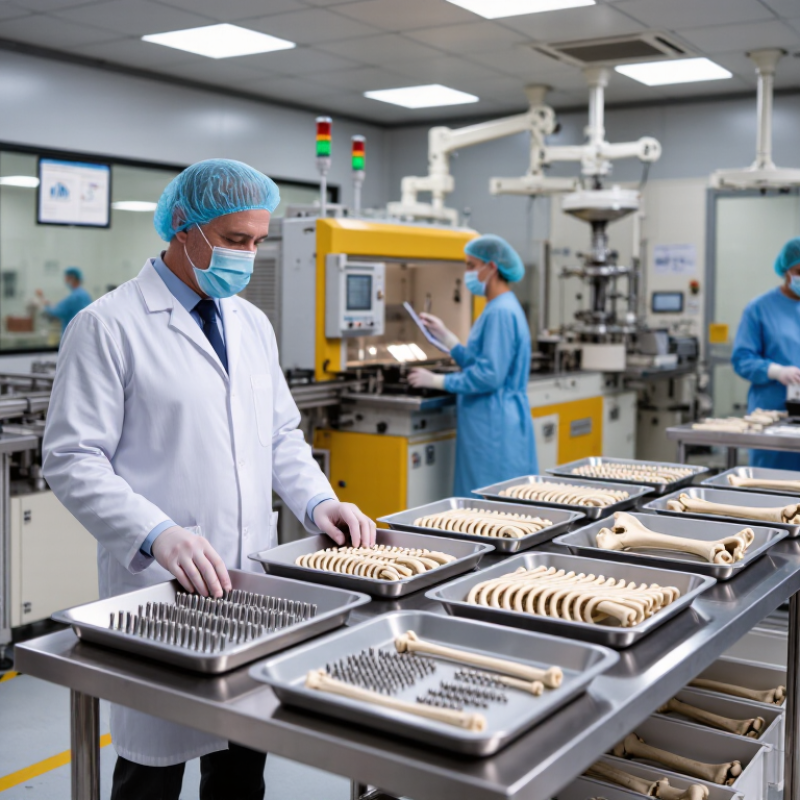
China Best Orthopedic Manufacturers for Global Buyers

Overview of China’s Orthopedic Manufacturing Industry

China’s orthopedic manufacturing industry combines specialized machining, materials processing, and medical-device assembly. Suppliers may produce instruments, implants, or components, but capabilities vary widely. In some industrial regions, buyers can find nearby machining, surface-finishing, and packaging services. This can shorten supply chains. It does not guarantee consistent quality.

Orthopedic products demand careful control of dimensions, materials, and manufacturing records. Buyers should review inspection methods, traceability, process validation, and applicable quality certifications. Ask how a supplier handles nonconforming parts and changes to production. Details matter. A polished factory tour can still leave gaps in process evidence. Supplier maturity also differs, even among companies with similar equipment. That deserves a closer look.

Tips: Request sample inspection records and clarify acceptance criteria before production. Check whether the quoted scope includes sterilization, packaging, or only manufacturing. Confirm lead times using realistic forecasts, not best-case estimates. Keep communication direct. Small documentation gaps can become costly later.

China’s Orthopedic Manufacturing Industry: Market-Demand Context

China’s population aged 65 and over, 2019–2023 (million people)

The growing older population is an important demographic context for orthopedic care and device demand. These figures describe population, not orthopedic production or sales. Source: China National Bureau of Statistics, annual statistical communiqués.

Major Orthopedic Product Categories and Their Applications

Orthopedic products serve different clinical needs, so buyers should compare categories rather than treat them as interchangeable. Internal fixation systems include plates, screws, and intramedullary nails. Surgeons use them to stabilize selected fractures while bone healing progresses. Joint replacement components, such as hip or knee implants, are designed for procedures addressing severe joint damage. Their geometry, material, and sizing options matter in planning. Fit matters.

External fixation systems hold bones in position using pins, rods, or adjustable frames outside the body. They may be used when fracture patterns or soft-tissue conditions require access to the injury site. Orthopedic instruments—including drills, saws, and reduction tools—support procedures, but their compatibility with implants should be checked carefully. Braces, supports, and mobility aids serve a different role: they can help restrict movement or assist rehabilitation under professional guidance. A catalog can make these choices look simpler than they are.

For global buyers, product evaluation should include intended use, dimensional drawings, material and traceability records, packaging details, and validated sterilization information where relevant. Requirements differ by market and product type, so documentation should be reviewed against local rules. Ask manufacturers about production controls and quality records, not only quoted price or delivery time. Even a small mismatch in connection size can disrupt planning. The paperwork is not glamorous, but it matters.

China Best Orthopedic Manufacturers for Global Buyers - Major Orthopedic Product Categories and Their Applications

Product Category Common Products Typical Materials Common Applications Key Buyer Considerations
Trauma fixation Bone plates, screws, intramedullary nails, wires and pins Titanium alloys, stainless steel and, for selected absorbable devices, bioresorbable polymers Stabilization of fractures in long bones and other skeletal sites; fixation of selected osteotomies Check implant material specifications, size range, compatibility of instruments, sterilization status and applicable market authorization.
Joint replacement Hip and knee prosthesis components, including stems, shells, liners and bearing surfaces Cobalt-chromium alloys, titanium alloys, ceramics and ultra-high-molecular-weight polyethylene Joint reconstruction, commonly for severe osteoarthritis and other conditions that damage joint surfaces Review component options, sizes, bearing combinations, surgical instrumentation and evidence supporting intended use.
Spinal implants Pedicle screw-rod systems, interbody cages, plates and selected vertebral body replacement devices Titanium alloys, stainless steel and radiolucent polymer materials such as PEEK Stabilization or reconstruction of the spine in selected cases of degeneration, deformity, trauma or instability Confirm system compatibility, intended spinal levels, available sizes, instrumentation and relevant imaging considerations.
Sports medicine and soft-tissue repair Suture anchors, interference screws, fixation buttons and selected repair instruments Titanium alloys, PEEK, absorbable polymers and medical-grade sutures Fixation or repair of tendons and ligaments, including procedures involving the shoulder and knee Compare fixation method, material, anchor dimensions, suture options and compatibility with the intended surgical technique.
External fixation External frames, clamps, rods, connecting components and fixation pins Stainless steel, titanium alloys and durable engineering polymers for selected components Temporary or longer-term stabilization of fractures, including some complex injuries and situations requiring access to soft tissues Assess frame configuration, adjustability, pin options, component interchangeability and instructions for assembly and care.
Bone graft substitutes and cements Bone void fillers, calcium-based substitutes and orthopedic bone cement Materials may include calcium phosphate, calcium sulfate, hydroxyapatite or polymethyl methacrylate, depending on product type Filling selected bone defects or, for bone cement, securing certain joint replacement components Check composition, handling properties, setting characteristics, intended use and any restrictions stated in the product labeling.
Orthopedic instruments and accessories Drill guides, reamers, implant insertion tools, trial components and instrument sets Stainless steel, titanium alloys and medical-grade polymers, depending on instrument function Preparation, measurement and placement of orthopedic implants during surgical procedures Verify compatibility with the associated implant system, reprocessing instructions, set contents and replacement-part availability.
Product materials and indications vary by device. Buyers should verify current product labeling, quality-system documentation and regulatory authorization for the destination market before procurement.

How Manufacturers Meet Quality and Regulatory Standards

Reliable orthopedic manufacturing depends on controls that can be checked, not broad quality claims. Buyers should review a supplier’s quality management system, including its documented procedures, staff training records, and corrective-action history. ISO 13485 certification can indicate a medical-device quality framework, but it does not prove that every product meets every destination-market requirement. Check the certificate’s scope and validity. Ask how materials, machining steps, and finished components are traced by batch. A clear record should connect a titanium implant to its material certificate, inspection results, and production history.

Regulatory expectations differ between markets and product types. Manufacturers should provide relevant technical documentation, risk assessments, and evidence supporting applicable testing. For sterile products, buyers may need to examine sterilization validation, packaging integrity, and shelf-life evidence. These details matter. A supplier audit can also reveal how workers manage measurement tools, segregate nonconforming parts, and investigate repeat defects. Paperwork can look complete while shop-floor practice tells a different story, so verify both. No audit catches everything. Buyers should keep communication open and agree on change-control procedures before production begins. A small design or material change can affect testing, labeling, or regulatory submissions, and it deserves careful review.

Criteria for Evaluating Chinese Orthopedic Manufacturers

Choosing a Chinese orthopedic manufacturer takes more than a polished factory tour. WHO and UNICEF’s 2022 Global Report on Assistive Technology estimates that 2.5 billion people need at least one assistive product. That number could reach 3.5 billion by 2050. Reliable supply and traceability therefore matter. Check that an ISO 13485 certificate covers the specific product and production site. Request destination-market registrations and recent audit findings. A certificate is only a starting point. Paperwork can mislead.

For implants, ask for material certificates, sterilization validation, packaging shelf-life evidence, and batch records linking raw materials to finished devices. WHO’s 2022 musculoskeletal conditions fact sheet estimates that 1.71 billion people live with these conditions. Demand alone, however, says nothing about a supplier’s process control. Review nonconformity trends, corrective actions, complaint handling, and change-control rules, including outsourced machining. Compare records with a sample batch; inspect its labels, seals, and instrument finishes. Ask who approves process changes. This step is often rushed. Public data rarely reveals factory-level defect rates, so treat marketing claims as leads, not evidence.

Global Sourcing, Logistics, and Supplier Partnerships

China’s orthopedic manufacturers can support global buyers, but sourcing should begin with evidence, not catalog photos. The World Bank’s 2023 Logistics Performance Index ranked China 19th, with a score of 3.7 out of 5. That offers useful context, not a delivery guarantee. Ask suppliers for recent shipment records, packaging specifications, and lot-level traceability. Check that product documentation matches the destination market’s requirements. Small details matter.

For bulky items such as operating tables or rehabilitation equipment, request carton dimensions, gross weight, and pallet plans before comparing freight quotes. Confirm who handles export documents, cargo insurance, and damage claims. UNCTAD’s Review of Maritime Transport 2024 describes how shipping disruptions can raise costs and delay cargo. Build a realistic buffer into launch plans, especially when shipments involve several components. A low quote may exclude storage or port charges. Read every line.

Strong partnerships depend on practical communication. Set response times for quality issues, agree on inspection points, and test the process with a small order when feasible. Video calls can clarify factory workflows, but they cannot replace independent checks or clear acceptance criteria. Share demand forecasts cautiously, and review changes together. I have seen planning sheets look precise while missing a local holiday or a packaging revision. That is worth checking twice.

FAQS

What should buyers evaluate when choosing an orthopedic manufacturer in China?

Review inspection methods, traceability, process validation, and quality records. A polished factory tour is not enough.

How can buyers verify a supplier’s quality certification?

Check that the certificate covers the specific product and production site. Request recent audit findings, too. Paperwork can mislead.

What records should buyers request for orthopedic implants?

Ask for material certificates, batch records, sterilization validation, and packaging shelf-life evidence. Match the records to a sample batch.

What details should a sample batch inspection include?

Check labels, seals, dimensions, and instrument finishes. Confirm acceptance criteria before production begins. Small gaps matter.

How can buyers reduce delays and unexpected shipping costs?

Request carton dimensions, gross weight, and pallet plans before comparing freight quotes. Confirm responsibility for export documents and damage claims.

Does a good logistics ranking guarantee on-time delivery?

No. It offers context, not a delivery guarantee. Review recent shipment records and build a realistic schedule buffer.

How should buyers test a new supplier relationship?

Agree on response times and inspection points. A small trial order can reveal communication gaps. It is not a perfect test.

Can a video call replace an independent factory check?

No. Video calls can clarify workflows, but they cannot replace independent checks or clear acceptance criteria. I might still miss a detail.

Conclusion

China’s Orthopedic manufacturing industry serves global buyers with a broad range of products, including implants, trauma fixation devices, spinal systems, joint replacements, and surgical instruments. These products support different clinical needs, from fracture treatment to mobility restoration. Manufacturers vary in production capabilities and specialization, so buyers should assess product fit, material quality, manufacturing consistency, technical support, and the ability to provide clear documentation.

Reliable sourcing also depends on robust quality management and compliance with applicable regulatory requirements in the destination market. Buyers can evaluate suppliers by reviewing quality-control processes, product testing, certifications, communication, and production capacity. Planning for logistics, lead times, packaging, and after-sales support helps reduce sourcing risks and build effective supplier partnerships. A careful, transparent evaluation can help global buyers identify Chinese manufacturers suited to their Orthopedic product needs.

Sophia

Sophia

Sophia is a dedicated marketing professional with an exceptional depth of knowledge about her company's products and services. With a keen understanding of market trends and customer needs, she crafts insightful blog posts that not only inform but also engage readers, enriching the company’s online......