SNK Medical
Global buyers are reviewing Orthopedic products more carefully than ever. Hospitals, distributors, rehabilitation centers, and specialty clinics need dependable solutions for changing patient needs. This guide introduces ten important Orthopedic product types shaping international procurement decisions. It considers braces, supports, implants, surgical instruments, mobility aids, rehabilitation equipment, and related supplies.
A product may look excellent in a catalogue. Real performance depends on material quality, sizing accuracy, sterilization requirements, user training, and after-sales support. A knee brace should feel secure during movement, not merely appear durable in photographs. Surgical instruments require precise manufacturing, consistent finishing, and traceable quality records. Mobility equipment must also match local care environments, floor conditions, and patient strength.
Details matter.
Experienced buyers often compare certifications, clinical evidence, warranty terms, replacement parts, and supplier communication. They also check whether product claims are supported by testing and recognized quality systems. However, procurement decisions are rarely perfect. A lower price may create higher maintenance costs later. A familiar supplier may still lack responsive technical support. Even this list has limits, because hospital priorities differ across regions and specialties. Careful evaluation remains essential.
The following overview explains what global buyers should examine within each product category. It connects practical purchasing experience with professional quality considerations and responsible healthcare sourcing. The goal is not to promote one brand. It is to support clearer comparisons, safer decisions, and more reliable patient outcomes across international markets.
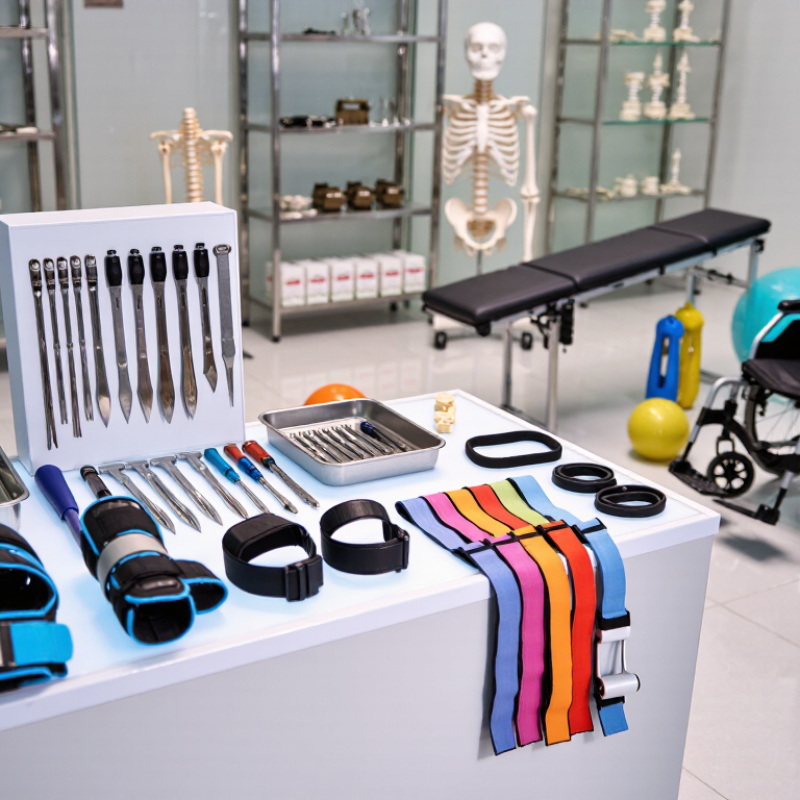
Orthopedic products support fracture care, joint restoration, spinal treatment, and daily mobility. Their clinical value depends on patient anatomy, surgical technique, and rehabilitation planning. Internal fixation systems, including plates, screws, nails, and wires, stabilize broken bones and encourage controlled healing. Joint replacement implants restore movement in severely damaged hips, knees, and shoulders. Spinal devices help correct instability, compression, or deformity when conservative care is insufficient.
External fixation frames are useful for complex fractures, open injuries, and temporary stabilization. Sports medicine products, such as anchors and ligament repair devices, support tendon and ligament reconstruction. Arthroscopy instruments allow surgeons to inspect and treat joints through small access points. Orthoses and braces provide alignment, protection, or controlled motion after injury. Casting and splinting materials remain practical for early immobilization. Rehabilitation equipment, including walking aids and continuous-motion devices, helps patients regain strength and independence.
Clinical application should guide procurement, not catalogue size. Buyers need evidence on material safety, mechanical performance, sterilization, and traceability. Product selection also requires trained users and clear instructions. A device suitable for one fracture pattern may be inappropriate for another. This detail is easy to overlook. Hospitals should review local surgical volume, surgeon preference, patient needs, and after-sales support before ordering. No product replaces careful diagnosis, sound technique, or follow-up assessment.
Global buyers need orthopedic products that match clinical demand, surgical skills, and local care conditions. The top 10 types include joint implants, trauma fixation systems, spinal devices, orthopedic braces, sports medicine products, external fixation systems, casting materials, surgical instruments, prosthetic limbs, and rehabilitation aids. Each category serves a different patient journey, from emergency fracture care to long-term mobility support.
Procurement teams should examine material quality, sizing options, sterilization methods, packaging, and traceability records. A knee implant may require precise instrument compatibility, while a trauma plate must tolerate practical operating-room pressure. Buyers also need technical files, quality certificates, clinical evidence, and clear instructions for use. Requirements vary between countries, so local regulatory review remains essential. Experience helps, but assumptions can still cause expensive mistakes. A low purchase price may hide training, maintenance, or replacement costs. That part deserves more attention.
Tips: Ask for sample documentation before placing large orders. Compare total ownership costs, not only unit prices. Check whether surgeons can use the products confidently. Confirm storage temperatures and shelf life. Keep a written supplier evaluation record. Small details matter. A reliable purchasing decision should balance patient safety, clinical performance, logistics, and after-sales support. Even familiar products need periodic review because hospital needs and regulatory expectations change.
| Rank | Orthopedic Product Type | Primary Clinical Applications | Common Materials or Configurations | Key Global Buyer Requirements | Relevant Quality and Regulatory Considerations |
|---|---|---|---|---|---|
| 1 | Fracture Fixation Plates | Fixation of fractures involving the upper and lower limbs, pelvis, clavicle, and other anatomical regions. | Titanium alloys, stainless steel, locking plates, compression plates, reconstruction plates, and anatomically contoured designs. | Wide anatomical range, accurate hole geometry, smooth edges, corrosion resistance, sterilization compatibility, and availability in multiple sizes. | Biocompatibility evaluation, material verification, dimensional inspection, fatigue testing, sterilization validation where applicable, and medical-device regulatory registration. |
| 2 | Bone Screws | Standalone fixation or use with plates, intramedullary systems, spinal constructs, and small-fragment orthopedic procedures. | Titanium alloy or stainless steel; cortical, cancellous, locking, cannulated, partially threaded, and fully threaded designs. | Consistent thread profile, reliable driving interface, correct screw length range, compatibility with selected plates, and clear size identification. | Material and surface-finish controls, mechanical performance testing, dimensional tolerances, packaging integrity, and biological safety assessment. |
| 3 | Intramedullary Nails | Internal fixation of long-bone fractures, including femoral, tibial, and humeral fractures. | Titanium alloys or stainless steel; solid or cannulated nails with locking holes and proximal or distal targeting features. | Multiple diameters and lengths, accurate interlocking-hole alignment, compatible targeting instruments, radiographic visibility, and dependable fatigue strength. | Fatigue and torsional testing, dimensional verification, material traceability, instrument compatibility validation, and applicable implant regulatory requirements. |
| 4 | Joint Replacement Implants | Replacement or resurfacing of damaged hip, knee, shoulder, and other synovial joints affected by arthritis, trauma, or degeneration. | Cobalt-chromium alloys, titanium alloys, stainless steel, ultra-high-molecular-weight polyethylene, and ceramic components. | Accurate sizing, low-wear bearing surfaces, secure fixation options, comprehensive instrumentation, long-term performance evidence, and post-market support. | Wear testing, fatigue testing, corrosion assessment, material characterization, biological evaluation, manufacturing-process validation, and clinical or performance evidence as required. |
| 5 | Spinal Implants | Stabilization, decompression support, deformity correction, and fusion procedures in the cervical, thoracic, and lumbar spine. | Titanium alloys, cobalt-chromium alloys, polyether ether ketone, and combinations of screws, rods, cages, plates, and connectors. | Construct compatibility, reliable locking mechanisms, radiographic imaging compatibility, anatomical sizing, strong fatigue performance, and complete surgical instrumentation. | Static and fatigue testing, subsidence and migration assessment for cages, biocompatibility, MRI-related evaluation where relevant, and regulatory documentation. |
| 6 | External Fixation Systems | Temporary or definitive stabilization of complex fractures, open injuries, bone defects, and limb-length or deformity procedures. | Stainless steel or titanium pins, carbon-fiber or metal rods, clamps, rings, wires, and modular frame components. | Modular interchangeability, pin and wire size variety, easy frame assembly, radiolucent components when needed, corrosion resistance, and reprocessing instructions. | Mechanical stability testing, material and coating controls, cleaning and sterilization validation for reusable components, and infection-risk management. |
| 7 | Arthroscopy Products | Minimally invasive diagnosis and treatment of knee, shoulder, hip, ankle, wrist, and elbow conditions. | Reusable stainless-steel instruments, optical components, polymer cannulas, suture anchors, shaver accessories, and fluid-management components. | Optical clarity, ergonomic handling, compatibility with existing equipment, reliable seals, cleaning accessibility, and availability of replacement parts. | Reprocessing validation for reusable devices, electrical and optical safety where applicable, biocompatibility, packaging integrity, and device-specific regulatory requirements. |
| 8 | Bone Graft Substitutes | Filling bone defects and supporting bone regeneration in trauma, spinal fusion, dental-maxillofacial, and reconstructive procedures. | Synthetic calcium phosphate ceramics, hydroxyapatite, beta-tricalcium phosphate, bioactive glass, and collagen-based formulations. | Defined particle size or putty consistency, controlled porosity, packaging stability, shelf life, traceability, and clear handling and preparation instructions. | Physicochemical characterization, sterility or bioburden controls where applicable, biological evaluation, shelf-life testing, and classification according to intended use and jurisdiction. |
| 9 | Orthopedic Braces and Supports | Non-operative support, joint stabilization, rehabilitation, protection after injury, and management of selected musculoskeletal conditions. | Neoprene, breathable textiles, thermoplastic components, aluminum stays, elastic straps, foam padding, and adjustable hinges. | Accurate sizing, comfort, breathability, easy adjustment, durable fastening systems, washable materials, and product labeling in target-market languages. | Textile and material safety, skin-contact biocompatibility where relevant, mechanical durability, labeling controls, and applicable medical-device classification. |
| 10 | Orthopedic Surgical Instruments | Preparation, positioning, insertion, removal, and adjustment of orthopedic implants during surgical procedures. | Surgical stainless steel, titanium, aluminum alloys, engineering polymers, reusable instruments, and procedure-specific instrument sets. | Accurate tolerances, ergonomic design, corrosion resistance, compatibility with implants, validated cleaning instructions, and dependable instrument-set organization. | Reusable-device cleaning and sterilization validation, mechanical and dimensional testing, corrosion testing, material traceability, and quality-system compliance. |
Top 10 Orthopedic Product Types Global Buyers Need
Orthopedic buyers often evaluate implants, fixation systems, joint replacements, braces, orthoses, surgical instruments, mobility aids, and rehabilitation supports. Each product type demands a careful material choice. Titanium alloys offer high strength with relatively low weight. Stainless steel remains practical for durable fixation tools and selected implants. Cobalt-chromium provides strong wear resistance in joint components. PEEK can support radiolucent designs, while UHMWPE helps reduce friction in bearing surfaces.
Design details affect daily clinical performance. A brace should follow natural joint movement without creating pressure points near the knee or shoulder. An implant needs smooth edges, stable geometry, and controlled surface texture. Mobility products require balanced frames, secure brakes, and handles that remain comfortable after repeated use. Surgical instruments should resist corrosion and allow reliable cleaning. Small tolerances matter. A one-millimeter mismatch can affect alignment, comfort, or assembly.
Performance testing should examine fatigue strength, wear, corrosion, sterilization tolerance, and dimensional stability. Buyers should request traceable material certificates, inspection records, and clear testing methods. Clinical feedback also matters, especially for products used for many hours each day. No material is perfect. Lightweight polymers may scratch, and strong metals may add unwanted weight. Some designs look advanced but feel awkward in real use. I have seen specifications miss this human detail. Supplier evaluations should therefore include sample handling, user trials, packaging checks, and confirmation of applicable local quality requirements before larger orders.
Key materials, design priorities, and performance requirements
The score represents the number of core procurement checkpoints commonly reviewed for each product category, including material safety, mechanical strength, fatigue or wear resistance, anatomical fit, sterilization, imaging compatibility, corrosion resistance, traceability, and regulatory documentation. It is a comparative specification index, not a market-share ranking.
Global demand covers joint implants, trauma plates, spinal devices, braces, orthopedic footwear, walkers, wheelchairs, casting materials, surgical instruments, and rehabilitation equipment. The World Health Organization’s Global Report on Assistive Technology estimates that over 2.5 billion people need assistive products today. That number may exceed 3.5 billion by 2050. These figures make affordability important, but safety must remain non-negotiable.
Buyers should verify material specifications, sterilization methods, shelf life, and batch traceability. Implants require documented biocompatibility and risk controls under ISO 10993 and ISO 14971. Quality systems should align with ISO 13485:2016. For markets using European rules, conformity assessment must follow Regulation (EU) 2017/745. U.S. shipments may require an appropriate FDA pathway, such as 510(k) clearance or premarket approval. Requirements vary by product.
Do not trust certificates alone.
A polished dossier can still hide weak traceability. Request test reports, adverse-event procedures, supplier audits, and recall records. Check whether packaging survives humidity, vibration, and temperature changes during transport.
WHO reports that 2.4 billion people may benefit from rehabilitation services globally. Therefore, mobility aids and rehabilitation products also need user testing, clear instructions, and reliable after-sales support. A lower price can become expensive when parts fail, training is missing, or documentation cannot support customs and clinical review.
Global buyers often source braces, supports, splints, mobility aids, orthopedic cushions, casting materials, surgical instruments, and rehabilitation equipment. Each product type requires different evidence, materials, and inspection methods.
A reliable sourcing process begins with a clear product specification. State dimensions, load requirements, skin-contact materials, packaging, and intended use. Ask suppliers for samples before approving bulk production. Check stitching, edges, fasteners, surface finish, and user comfort. Small defects become expensive at scale. They also become complaints.
Customization should solve a real clinical or purchasing need. Suppliers may adjust color, sizing, labels, packaging, or component materials. However, every change can affect fit, durability, cleaning, and testing requirements. Request a written change record. Confirm production tolerances and sample approval procedures. A beautiful prototype can still fail during repeated use.
Supplier evaluation needs more than a low quotation. Review manufacturing experience, quality controls, traceability, inspection records, and communication speed. Verify whether testing supports the product’s stated purpose and target market. Ask how the supplier handles rejected units and corrective actions. Factory visits can reveal storage problems that documents hide. Remote audits help, but they are not perfect. Buyers should compare at least two suppliers and keep evidence for every decision.
Common categories include joint implants, trauma fixation systems, spinal devices, braces, and sports medicine products. External fixation systems, casting materials, surgical instruments, prosthetic limbs, and rehabilitation aids are also widely purchased. Each category supports a different patient need.
Titanium alloys provide strength with relatively low weight. Stainless steel suits durable fixation tools and selected implants. Cobalt-chromium offers strong wear resistance in joint components. PEEK supports some radiolucent designs, while UHMWPE can reduce bearing friction.
Braces should follow natural movement without creating pressure near the knee or shoulder. Implants need smooth edges, stable geometry, and controlled surface texture. Mobility products should have balanced frames, secure brakes, and comfortable handles. A one-millimeter mismatch can affect alignment or comfort.
Buyers should review fatigue, wear, corrosion, sterilization, and dimensional stability testing. Request traceable material certificates and inspection records. Testing methods should be clearly documented. No material is perfect.
Compare manufacturing experience, quality controls, traceability, inspection records, and communication speed. Review at least two suppliers before making a major decision. Keep written evidence for every evaluation. A low quotation can hide future costs.
Yes, sample approval can reveal defects before mass production. Check stitching, edges, fasteners, surface finish, packaging, and user comfort. For instruments, inspect cleaning access and corrosion resistance. Small defects become expensive at scale.
State dimensions, load requirements, skin-contact materials, packaging, and intended use. Include sizing ranges, storage temperatures, shelf life, and sterilization requirements. Specify labeling and traceability expectations. Vague specifications invite avoidable misunderstandings.
Customization may change colors, sizes, labels, packaging, or component materials. Every change can affect fit, durability, cleaning, and testing requirements. Request written change records and approve production samples. A beautiful prototype can still fail during repeated use.
Local regulatory requirements should be reviewed before purchasing or importing products. Ask for technical files, quality certificates, clinical evidence, and instructions for use. Confirm training, maintenance, replacement parts, and after-sales support. Documents help, but practical user trials still matter.
This guide provides global buyers with a practical overview of the most important Orthopedic product categories and their clinical applications, including trauma fixation devices, joint reconstruction systems, spinal supports, external braces, surgical instruments, orthopedic implants, mobility aids, rehabilitation products, compression solutions, and related accessories. It explains how each product type supports injury treatment, surgical procedures, recovery, or long-term musculoskeletal care, helping buyers match product functions with patient and healthcare requirements.
The article also examines essential materials, ergonomic designs, durability, biocompatibility, sterilization compatibility, and performance expectations. It highlights the importance of quality management, safety testing, traceability, and applicable regulatory documentation for international procurement. In addition, buyers will find practical guidance on supplier evaluation, product customization, manufacturing capabilities, minimum order quantities, packaging, communication, and after-sales support. By considering clinical use, technical specifications, compliance, and supply reliability together, purchasing teams can make more informed decisions and build sustainable sourcing partnerships.
