SNK Medical
SNK Medical
SNK Medical
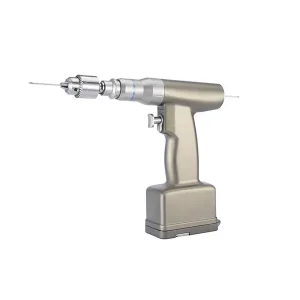
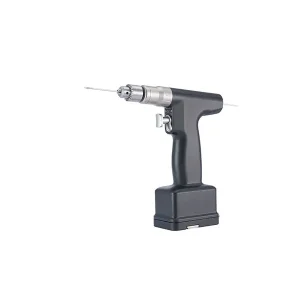
The global orthopedic power tool market has witnessed a paradigm shift toward high-precision, variable-speed instruments. Among these, the 0-1200 RPM drill stands as the industry benchmark for trauma and reconstructive surgery. This specific speed range is critical for maintaining bone viability; speeds exceeding this threshold without proper irrigation often lead to thermal necrosis, while speeds too low compromise surgical efficiency.
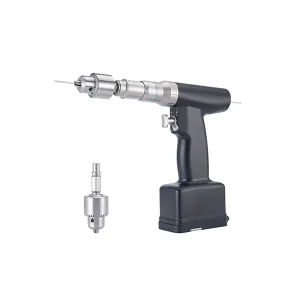
Today, hospitals in North America, Europe, and Asia-Pacific are increasingly demanding CE-certified medical devices that offer not just power, but "intelligent torque." As a leading 0-1200 RPM drill manufacturer, we recognize that the commercial landscape is moving toward modularity. A single handpiece must now support multiple attachments—from reamers to K-wire drivers—allowing surgical teams to pivot quickly during complex procedures.
The industry is transitioning from traditional carbon brush motors to advanced brushless motor systems. Why? Brushless technology offers a 3x longer lifespan, significantly lower noise levels, and higher sterilization durability. In the global surgical arena, the trend is focused on "Total Cost of Ownership" (TCO). While the initial investment might be higher, the MTBF (Mean Time Between Failures) of 50,000 hours in our SNK series provides unparalleled value to healthcare providers.
Furthermore, ergonomics has become a top priority. Surgeons operating for 6-8 hours require lightweight, balanced tools. Our use of carbon fiber and magnesium alloys reduces hand fatigue by up to 30% compared to traditional stainless-steel models.
When international distributors and hospital procurement departments search for a medical drill manufacturer, their checklist is rigorous: CE Certification, ISO 13485 compliance, and robust OEM/ODM capabilities. In regions like Latin America and Southeast Asia, there is a massive surge in demand for reliable "Trauma Kits" that can withstand high-frequency use in public hospitals.
Orthopedic Trauma: High-torque drilling for plate and screw fixation in long bone fractures.
Joint Arthroplasty: Precision reaming (0-300 RPM range) for total hip or knee replacements.
Neurosurgery: Controlled cranial drilling where micron-level accuracy is non-negotiable.
As an OEM manufacturer, we don't just sell tools; we provide localized solutions. This includes customized packaging for specific markets, localized voltage compatibility for chargers, and modular attachments tailored to specific surgical techniques prevalent in different countries.

Shanghai Schnecon Technology Development Co., Ltd. is an orthopedic device company integrating design, R&D, production, sales and service. The company was established in 2009. After 16 years of hard work, it has accumulated rich experience in independent R&D and production, and cultivated a group of high-quality technical management teams.
Advanced motor systems: Our brushless motors utilize magnetic levitation technology, achieving 50,000 hours MTBF (3x lifespan of conventional models).
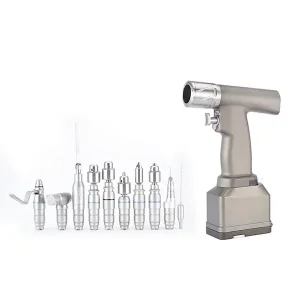
Intelligent power platform: Modular design supports 16 surgical attachments with 0.01s response time.
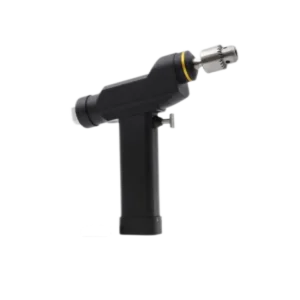
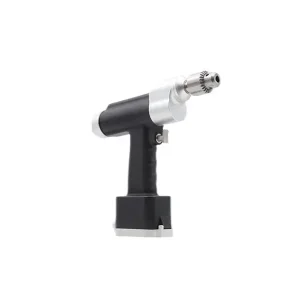
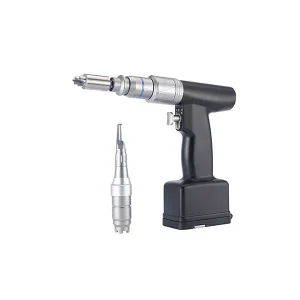
Product Portfolio Includes: Bone drills (200-28,000 RPM), Hollow drills with triple-speed control, Oscillating saws (±5° amplitude precision), Reciprocating saws (15cm max cutting depth), Cranial milling system (titanium alloy, micron-level accuracy), Acetabular reamers with infrared positioning (±0.5mm).
We adhere to the corporate philosophy of "quality first, customer first, excellence and continuous innovation". Our products are elegant and beautiful in appearance, easy to operate, energy-saving and efficient, safe and environmentally friendly, stable and intelligent.
Being based in Shanghai, China, we leverage a world-class supply chain to offer competitive pricing without sacrificing the precision required for medical-grade instruments. Our R&D team can prototype new attachments in as little as 4 weeks, providing our OEM partners with a significant "Time-to-Market" advantage.
In the realm of orthopedic surgery, the drill is an extension of the surgeon’s hand. The 0-1200 Rpm range is not an arbitrary figure; it is scientifically calibrated. When a surgeon works on the femoral shaft, the density of the cortical bone requires high torque at moderate speeds to ensure the drill bit doesn't "walk" across the bone surface. As the bit penetrates the medullary canal, the feedback must be instantaneous. Our SNK series utilizes high-frequency sensors that sample motor load 1000 times per second, providing the surgeon with a tactile feel that was previously only possible with manual hand-crank drills.
The global healthcare system is under pressure to reduce costs while improving patient outcomes. Our role as a China-based manufacturer is to bridge this gap. By implementing Lean Six Sigma manufacturing processes, we have reduced the defect rate to less than 0.01%, ensuring that every 0-1200 RPM drill leaving our factory is ready for the rigors of a sterile operating room. This reliability reduces intraoperative delays, which are estimated to cost hospitals upwards of $60 per minute in OR time.
Modern procurement trends are also shifting toward sustainability. Traditional "single-use" components are being scrutinized. Shanghai Schnecon's commitment to durability means our power systems are designed for over 1,000 autoclave cycles. We use eco-friendly aluminum cases and minimize plastic waste in our packaging, aligning with the green initiatives of modern European and American medical institutions.
As we look toward 2030, the 0-1200 Rpm drill will no longer be a "dumb" tool. We are currently developing Bluetooth-enabled handpieces that record surgical data, providing analytics on bone density and tool wear. This data can be integrated into the patient’s Electronic Health Record (EHR), paving the way for AI-assisted surgical planning.